
Bryce Canyon National Park, Utah
- Mrs. Doucette

- Aug 8, 2019
- 3 min read
After driving from Zion National Park to Bryce (approximately 1.5 hours) we checked into the cutest little cabin before heading over to the park. We spent one and a half days in this gorgeous park. The park is like no other and a must to visit. After teaching geology to my 4th grade students I was excited to actually be walking through hoodoos.
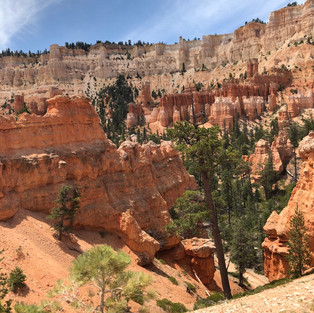
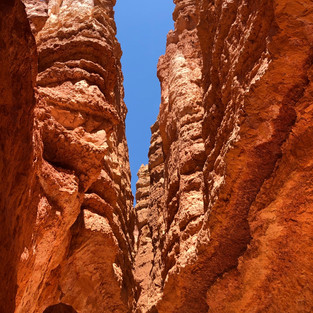
Upon arriving to the park we jumped on the free shuttle that takes you the key points within the park. The shuttle is easy jump on and off and runs often. We found this an easier mode of transportation within the park. The weather was very hot while we were there. We decided to hike along the rim down into the hoodoos and back up. This hike emoted all types of emotions. Throughout the hike I was amazed at the beauty that was in front of me, all the while I was shaking with fear while traversing the narrow rim trails. We started under the Rim Trail to Peekaboo to Navaho Trail and ending at Sunset Point. Bryce Canyon rim elevations range roughly between 8,000 and 9,000 feet. The hike took most of the day to complete and was one of the most rewarding accomplishments of the trip. The trail led us down the plateau into the canyon to walk through the hoodoos. These structures tower over you as you advance across the canyon floor. The climb up was difficult for me (my fitness tracker thought it was on someone else's wrist). After a hot and steep trek back up the plateau I was once again feeling proud of my accomplishment and in awe of the beauty that was sprawling in front of me.
The park also offers a scenic drive. The drive is beautiful and a must! From about 8,000 feet near the visitor center the drive gradually winds 1,100 feet higher to Rainbow Point.
Geology of Bryce Canyon
Long ago, and changing over the great spans of time, the rocky area of Bryce Canyon was once covered by sea, mountains, desert and coastal plain. Over millions of years, the rock and land was subject to violent storms and severe changes. Earthquakes, mudslides and volcanoes roared upon the primitive earth, forcing, molding and reshaping it. Seas and streams came and went, moving sediment and depositing it in layers. The Hoodoos of Bryce Canyon are 60 million years old. More changes occurred until sand, gravel and sedimentary deposits filled ancient lakes within the Colorado Plateau. These materials compressed and hardened into sedimentary rock. The hoodoos of Bryce Canyon are 60 million year old sculpted rock formations which consist of limestone, dolomite and siltstone layers.
A hoodoo is a tall, thin spire of rock that protrudes from the bottom of an arid drainage basin. Hoodoos typically consist of relatively soft rock topped by harder, less easily eroded stone that protects each column from the elements. They generally form within sedimentary rock and volcanic rock
Wildlife
Some of the unique wildlife you’ll find in Bryce Canyon Country are Rocky Mountain elk, mule deer, pronghorn, the Utah prairie dog, North American porcupine, Uintah chipmunk, Green Basin rattlesnake, common sage lizard and short-horned lizard. Bryce Canyon National Park alone has 59 mammal, 210 bird, and at least 15 reptile and amphibian species living in the park and the surrounding five-mile radius. But boundaries are a human concept, so keep a sharp eye as you travel as Bryce Canyon Country’s creatures often migrate in search of food, shelter, and climate. This included mountain lions and cougars.
If you can, Bryce is a must for any national park trip!







Comments